
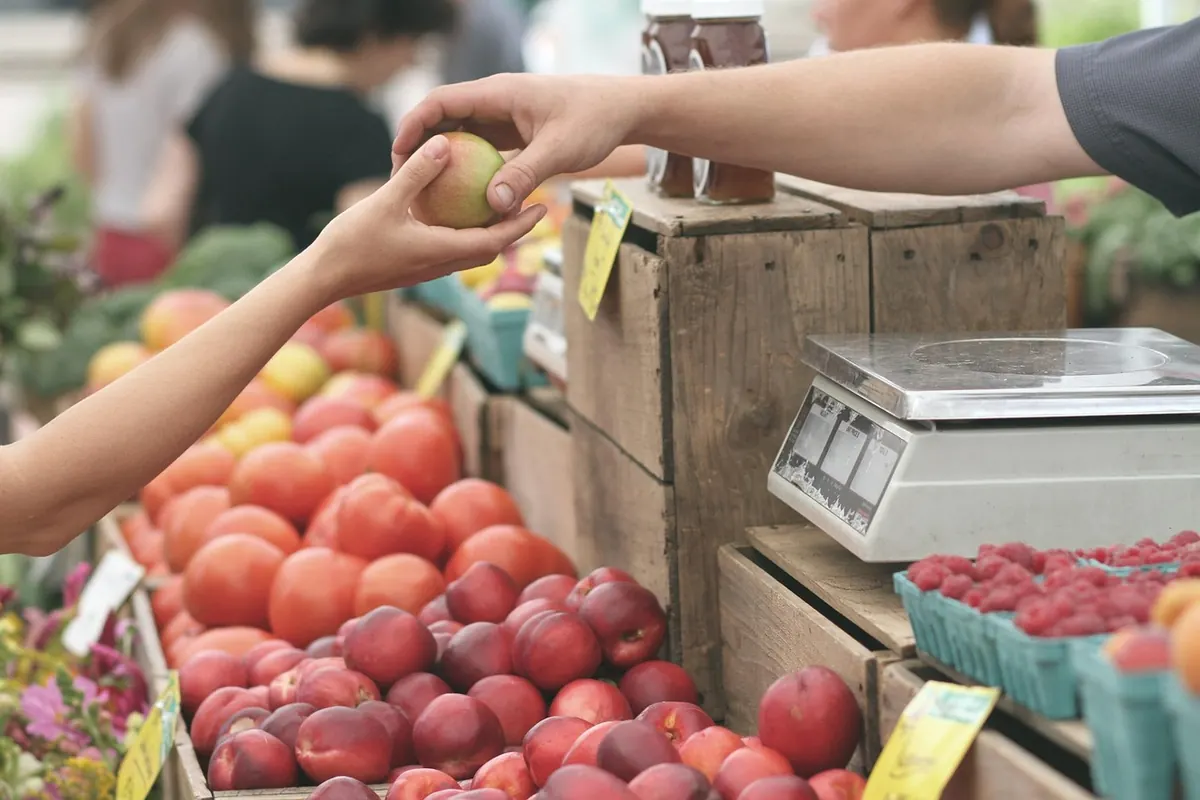
A farmers' market cheese stall is one of the last places where buying food involves a proper conversation. The person behind the table usually made what they're selling, or knows the person who did, and most would far rather talk you through a cloth-bound Cheddar than watch you take a guess. You can buy perfectly well without saying a word. But two or three questions will get you a cheese that's right for tonight rather than one that sits in the fridge going sad. Here's what to ask, roughly in the order it comes up.
How Long Has It Been Aged, and When Was It Cut?
Ageing shapes flavour, but the cut date usually decides how good your wedge tastes. A whole truckle keeps developing in the cave; once it's cut, the clock speeds up, especially with soft cheeses. So ask when it was cut. If the answer is "this morning", take it. If it's a wrapped wedge that has been sitting on the table since last weekend, ask for a fresh cut from the wheel. Most stallholders will happily oblige, and you'll notice the difference within a day.
For soft-ripened cheeses, ask where it is in its life: still chalky in the middle, or already oozing under the rind? A Brie-style cheese moves from firm and milky to creamy to distinctly ammonia-sharp, and you want to catch it in the middle. If you're not eating it until the weekend, say so and they'll steer you towards the firmer one.
With hard cheeses, ask how long it has been aged and in what conditions. Months in cloth, on wooden shelves, in a cool cellar all leave their mark: brothy, nutty, sometimes with those little crunchy crystals that form in long-aged cheeses. Those are a sign of time, not a fault.
Where Exactly Did the Milk Come From?
"Local" gets used loosely at markets. Ask which farm, which herd, and how far the milk travelled. Some small dairies use milk from their own animals; others buy in milk from further afield and make the cheese on site. Neither is wrong, but if provenance is the reason you're shopping this way, it's worth knowing the difference before you hand over your money.
Then ask about the animals and the season. Milk from Jersey and Guernsey herds tends to be richer, and it shows in the finished cheese. Spring grass and late-autumn grazing give different results too. If you loved a cheese in May and find it tastes deeper in October, that's the milk changing, not the maker slipping. Ask whether the cheese is made year-round or only when the milk is at its best, and you'll start to understand why some stalls sell out by ten in the morning.
Raw or Pasteurised, and What About the Rind?
Ask which it is, and why they chose it. Unpasteurised, or raw, milk can carry more of the farm and the season into the finished cheese. Pasteurised milk gives a maker more consistency, which matters for soft cheeses that have to travel. Neither is automatically better, so let the answer guide your choice rather than deciding for you.
Some people are advised to avoid unpasteurised dairy, particularly during pregnancy or if their immune system is compromised. If that might apply to you, check with your GP or midwife before buying rather than relying on a market chat.
Rind questions are just as useful. Is the rind meant to be eaten? On a Camembert-style cheese the white coat is part of the experience; on a cloth-bound Cheddar the cloth and the hard grey crust are not. A washed-rind cheese has an orange coat that's edible but pungent, and the maker will tell you whether the paste inside is mild or fierce. If a wrapped cheese smells sharply of ammonia when you lift the paper, it's past its best. Ask to smell before you buy. Nobody minds.
How Should I Store and Serve It at Home?
Get this right and a good market cheese stays good for a week or more. Ask the stallholder directly: how long will this keep once I get it home, and how do you keep it yourself?
- Keep it cool but not icy. A fridge drawer or the bottom shelf works better than the door, where temperatures swing every time you open it.
- Wrap in waxed paper or baking parchment, then loosely in a paper bag. Tight plastic traps moisture and turns rinds slimy.
- Keep blues well away from everything else. Mould travels, and it does not need help.
- Store soft cheeses in a lidded box in the coolest part of the fridge; hard cheeses can be wrapped more snugly.
- Take cheese out half an hour to an hour before serving. Cold mutes flavour and makes even a rich cheese taste flat.
Finally, be honest about how much you'll eat. A smaller piece you finish is better than a large one that dries out. Hard cheeses can be grated and frozen for cooking, but don't freeze a soft cheese you plan to put on a board.
What Would You Pair It With?
This is where the maker earns their place. They know what the cheese does at room temperature, and they'll usually have a favourite combination. A fresh goat's cheese likes radishes, herbs and a crisp white. A cloth-bound Cheddar wants apples, chutney and cider or a dark ale. Washed-rind cheeses sit happily with new potatoes, rye bread and dry cider. Blue cheese and pears, walnuts and a little honey rarely disappoint.
If you're building a board, ask for help choosing a spread rather than buying everything that catches your eye. A useful order to taste in:
- Something fresh and young
- Something soft-ripened
- Something washed-rind or pungent
- One hard, well-aged cheese
- One blue
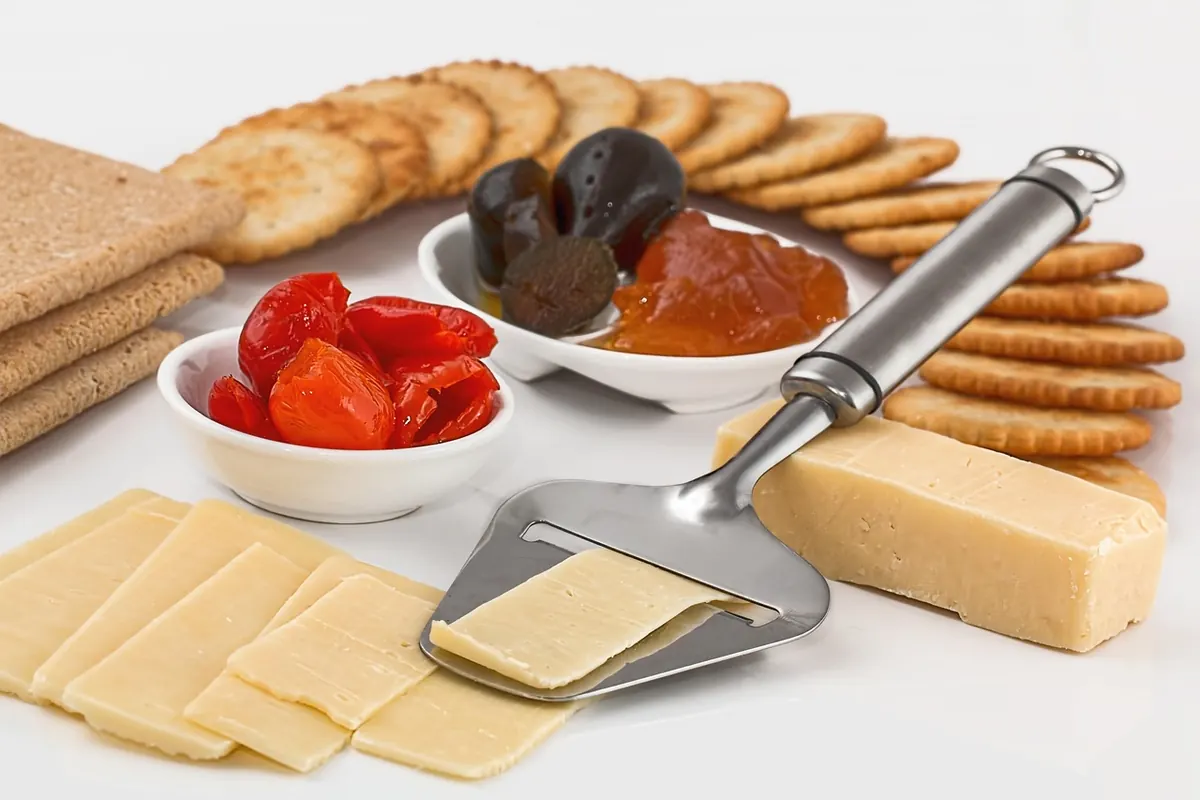
Three excellent cheeses beat seven indifferent ones. Add bread, something crisp, something sweet and something pickled, and you're done.
A Few Questions to Keep in Your Pocket
You don't need all of this every Saturday. Five questions will carry you a long way:
- When was it cut?
- Where's the milk from, and which animal?
- Raw or pasteurised?
- How long will it keep once I open it?
- What do you eat it with?
Ask those, taste before you buy, and make a note of the maker's name so you can find them next week. Buying from the same stall across a season teaches you more about cheese than any book, and the stallholder will start setting things aside for you. That's the real advantage of shopping this way.
Photo: Pexels / Pixabay