
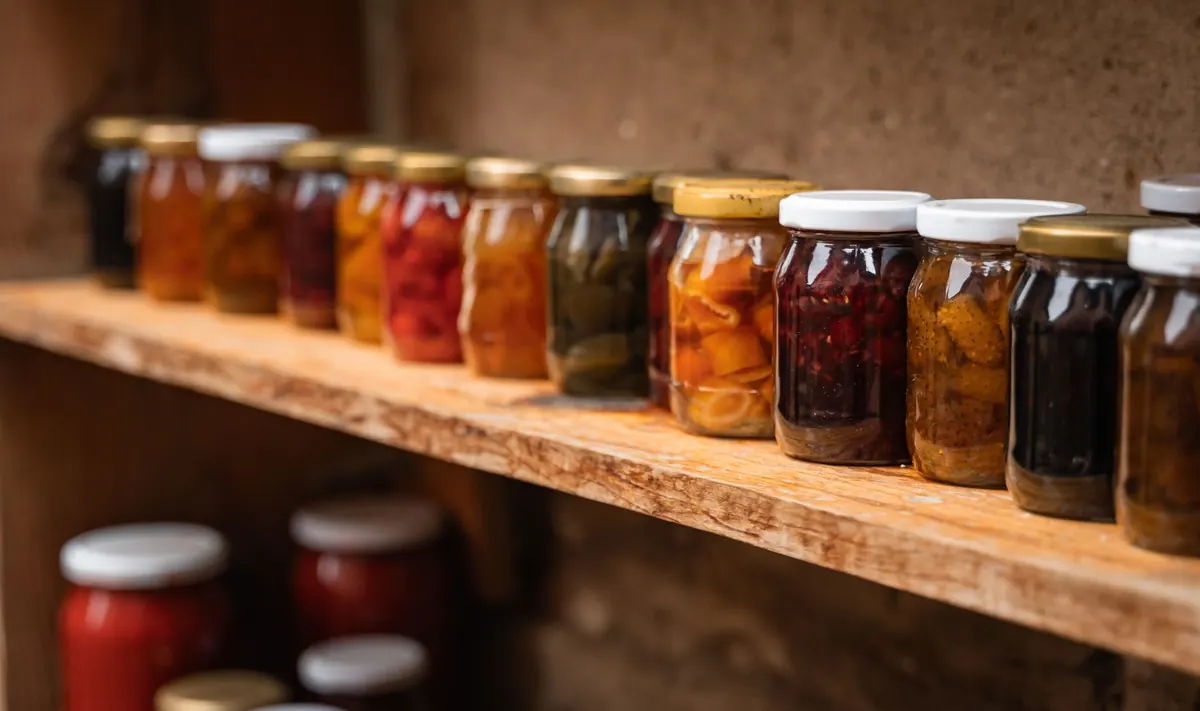
There is a particular disappointment in lifting a jar of last autumn's damson jam from the shelf and finding a green fur under the lid. Almost always the jam itself was fine. The jar was the problem. Sterilising is the least glamorous part of preserving and the easiest part to rush, yet it is where most home preserves quietly fail. The comforting news is that the faults are predictable, the fixes are cheap, and once you have a routine, the job takes about ten minutes.
Cleaning Comes Before Sterilising
Sterilising kills what is living on the glass. It does not remove grease, dried fruit juice or the residue left by a sticky label. A jar that goes into the oven with a smear of old jam inside becomes a jar with baked-on jam inside, and no amount of scrubbing will shift it afterwards.
So wash first, properly. Hot soapy water, a bottle brush down the inside, and a small brush around the rim and the threads where the lid grips. Rinse in hot water and run a fingertip around the rim: it should feel perfectly smooth, with no nicks or chips. A chipped rim will never hold a vacuum, so retire that jar to holding pens and paperclips.
Washed jars should be sterilised and used the same day. If you wash them the night before, store them upside down on a clean cloth and sterilise them again — dust settles, and a kitchen is a dusty place.
Wet Jars Make Weak Seals
A wet jar is the single most common reason a lid fails to seal. Water sitting in the bottom dilutes the preserve. Worse, water on the rim or in the seal area stops the lid fusing to clean glass, so the vacuum never forms properly — or forms and then creeps loose over the following weeks.
Whichever method you use, the jar must be dry and still warm when the preserve goes in:
- Oven: stand clean jars upright on a baking tray in a moderate oven, around 130–150°C, for 15–20 minutes. They dry as they heat. Take them out when you are ready to fill, not twenty minutes early.
- Dishwasher: reliable only if the cycle is genuinely hot and includes a drying phase. Leave the jars in the machine, door ajar, until the moment you need them.
- Steam: invert jars over a pan of boiling water for ten minutes, then drain and dry them in a low oven. The draining step is the one people skip, and it is the one that matters.
Do not dry jars with a tea towel. It looks tidy and undoes the work in a single wipe.
Cloudy Jars and the Hard Water Problem
Cloudiness in a freshly sterilised jar is usually limescale, not dirt. Hard water leaves a mineral film when it dries, and that film can be mistaken for a failed clean. A splash of white vinegar in the final rinse water helps, as does filtered water for the last rinse. Use less washing-up liquid than you think you need and rinse until the water runs clear.
Some cloudiness, though, is permanent. Repeated dishwasher cycles etch glass over time, and etched jars stay hazy forever. They are still perfectly usable — keep them for dry goods and spare your good jars for jam. It also helps to know that a slightly cloudy jam is a different thing entirely: fruit skin, undissolved sugar or a preserve that was not skimmed will look hazy in the jar and is not a safety issue.
The Lid Mistakes That Break a Seal
Lids are where people take the biggest gamble, usually without realising it. The sealing compound on a twist-off lid is designed for one heat seal. Reused lids often hold at first and let go months later, when you are no longer watching. If you do reuse one, use it only for a jar you will eat within a few weeks and keep in the fridge. Never reuse a lid that is rusted, dented, or has a visible break in the compound.
Do not sterilise lids in a hot oven — the compound softens and can distort. Pour boiling water over them, or simmer them briefly, then dry them on a clean rack.
When the jar is filled, screw the band on finger tight. Overtightening distorts the lid and can lift the seal as the contents cool. Once the jars are cold, take the bands off before storing. A band left on can hold a lid down over a vacuum that has already failed, which means you find out about the problem only when you open the jar. Bands also rust in the cupboard.
Filling Errors That Cost You the Seal
Most seal failures happen in the ninety seconds between the pan and the lid.
- Fill hot preserve into hot jars, straight from the oven or machine. Letting jam cool in the pan and then spooning it into cold jars all but guarantees a weak seal.
- Leave the right headspace: roughly 5mm for jam, a little more — about a centimetre — for chutney, which traps air as it settles.
- Use a clean ladle and a wide funnel. Never use the spoon you have been tasting with, and keep your fingers out of the inside of the jar.
- Wipe the rim with a clean, damp cloth or piece of kitchen paper before the lid goes on. Any sticky smear means the lid seals to sugar rather than glass.
- Lid the jar immediately. Do not leave filled jars standing open while you rinse the pan.
Storage Decisions That Undo Good Work
Leave the jars undisturbed for twelve to twenty-four hours to cool. Moving them about while the vacuum is forming is a needless risk. Then press the centre of each lid: it should be concave and stay that way. Any jar whose lid flexes has not sealed — put it in the fridge and eat it first, within a few weeks.
Label each jar with contents and date, and store in a cool, dark, dry cupboard. The warm shelf above an oven and the damp cupboard under a sink will undo months of good work.
If mould appears, discard the whole jar rather than scraping the surface. Mould threads and any toxins they produce can spread well beyond what you can see, and scraping only removes the visible part. The same rule applies with more force to low-acid preserves, where the risks are greater; if a jar looks, smells or tastes wrong, throw it out rather than tasting to check. If you are preserving anything low in acid, or working without a tested recipe, seek proper guidance before you store it.
The Short Version: A Routine Worth Repeating
- Wash in hot soapy water, rinse well, and check the rim for chips.
- Sterilise by oven, dishwasher or steam — and leave the jars there until needed.
- Keep jars hot and dry. No tea towels.
- Fill with hot preserve, leave proper headspace, wipe the rim, lid on finger tight.
- Cool undisturbed, check the seal, label, remove the bands, store cool and dark.
Get these habits in order and sterilising stops being the anxious part of preserving. It becomes the quiet, tidy ten minutes before the interesting bit.
Photo: Yasin Onuş / Pexels