
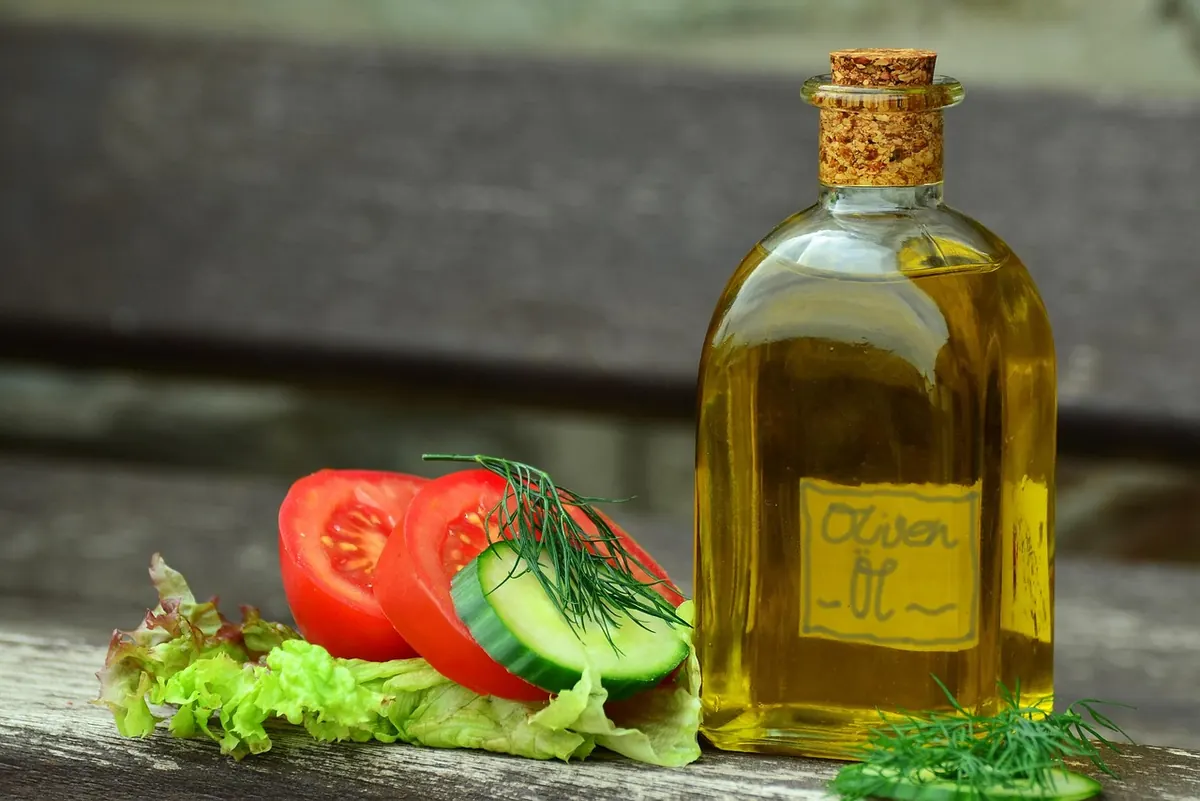
There's a moment in most baking kitchens when you reach for the oil and pause. The bottle of cold-pressed Cotswold rapeseed looks golden and promising; the olive oil beside it has more character than the cake in front of you probably wants. Both are liquid fats. Both will bake. But they behave differently enough that swapping one for the other blindly is a gamble.
Here's what actually changes.
Flavour: What Each Oil Brings to the Bake
Cold-pressed rapeseed oil from around here is quiet. It tastes faintly buttery, a little grassy, and often finishes with a soft peppery note at the back of the throat. In a sponge or a batch of shortbread, that character mostly disappears into the background.
Extra virgin olive oil is the opposite. Good bottles are green, bitter and peppery, and they don't disappear. Bake a plain Victoria sandwich with extra virgin olive oil and you'll taste it arguing with the jam.
There's a middle path: the pale, refined olive oils sold as "classic" or "light". They're mild and slightly flat, and they work where you want the oil to stay out of the way entirely. As a rule, match the oil to the strength of the bake — neutral oil for delicate recipes, characterful oil for bakes with something to push against, such as chocolate, citrus, spice or wholemeal.
Smoke Point: Where It Matters and Where It Doesn't
As a rough guide, extra virgin olive oil begins to smoke somewhere around 190–200°C. Refined olive oil and refined rapeseed oil sit considerably higher, often 220–240°C, while cold-pressed rapeseed falls somewhere between the two depending on the bottle. Check your label.
Now the useful part. Cakes bake at 160–180°C, biscuits at 170–190°C. Almost everything in a standard baking tin sits comfortably below the smoke point of either oil, so for the inside of the cake, smoke point is rarely the deciding factor.
It matters in three places: greasing tins and trays for hot bakes, finishing something under a fierce grill, and anything you shallow-fry or roast alongside. If your recipe goes above roughly 200°C, reach for rapeseed.
Texture: Crumb, Crust and Keeping Quality
Butter is roughly 80 per cent fat, the rest water and milk solids. Oil is all fat, and that changes how a batter sets.
Cakes made with oil tend to be tender and moist, with a finer crumb and a slightly denser slice on the first day. They also keep better: a rapeseed oil sponge is often better on day three than a butter sponge was on day one. Olive oil brings a slightly chewier, closer texture, and its flavour grows more pronounced as the cake sits.
Crust is the trade-off. Oil-based bakes brown evenly but don't develop the crisp, almost biscuity edge you get from butter.
A Bake-by-Bake Guide
Cakes and sponges
For Victoria sandwiches, madeira, lemon drizzle and plain loaf cakes, use mild cold-pressed Cotswold rapeseed. It carries vanilla, lemon or almond without competing. Save the extra virgin for cakes that can take it: chocolate, carrot, orange and polenta, olive oil and rosemary, or any recipe already written around olive oil. Warming the oil slightly helps if it has thickened in a cold cupboard.
Biscuits and cookies
Oil makes cookies spread more and bake softer. Chill the dough for half an hour before shaping and the spread becomes manageable. Rapeseed suits oat cookies, flapjacks and anything where you want a buttery flavour to lead. Olive oil is excellent in savoury biscuits — rosemary, sea salt, cracked pepper — and in biscotti.
Pastry
Oil pastry is a different creature from butter pastry. Whisk the oil with cold water, pour it into the flour, and bring it together with a light hand. The result is short and crumbly rather than flaky, and it's very good for savoury tarts, hand pies and quiches. Rapeseed gives you a neutral shortcrust; olive oil gives a savoury one. Where you need lamination — puff, rough puff, croissants — oil can't do the job.
Swapping Butter for Oil
A few adjustments make the swap predictable:
- Use about 80g oil for every 100g butter. Butter isn't all fat, so matching weights gives you an over-oily bake.
- Bring eggs to room temperature. Oil emulsifies into a batter more easily when nothing is cold.
- Add a splash of milk if the batter looks tight. Oil brings no water with it; butter does.
- Mix just until it comes together. Liquid fat coats flour quickly, and over-mixing gives a rubbery crumb.
- Expect a slightly lower rise the first time. Note it on the recipe rather than assuming you did something wrong.
- Keep the oven temperature the same but check two or three minutes early — oil bakes colour at the edges a little faster.
Store cold-pressed oils in a cool, dark cupboard rather than beside the hob, and buy smaller bottles than you think you need. They are fresh products, and they fade.
Start With One Bake at a Time
Choose a recipe you make often — a lemon drizzle, a batch of oat biscuits — and swap half the butter for rapeseed oil first. You'll notice the change in texture without losing the familiar flavour. Once you know how that behaves, try the same bake with extra virgin olive oil and see which you prefer.
The short version: mild Cotswold rapeseed for cakes, sponges and biscuits where you want the bake to lead, and extra virgin olive oil for chocolate, citrus, polenta, carrot and savoury pastry, where the oil earns its place.
Photo: congerdesign / Pixabay