
Autumn gatherings are rarely the sit-down kind. The fire goes on at five, someone opens a bottle of local cider, and people drift in and out of the kitchen. A cheese board suits that rhythm perfectly. It needs no cooking, it improves after half an hour out of the fridge, and it makes good use of the chutneys you jarred in September. Twenty minutes of assembly gets you a board that looks generous and tastes unmistakably of the season.
Start With Three Cheeses and a Clear Idea
Three to five cheeses is the sweet spot. More than that and the board becomes a tasting menu nobody asked for; fewer and there is nothing to compare. Build around contrast rather than a theme: one soft or fresh cheese, one hard, one blue or washed rind.
A Gloucestershire trio is a fine place to begin. A mellow, crumbly Single Gloucester gives you the hard cheese, and a wedge of Double Gloucester or the chive-flecked Cotswold version adds richness. Stinking Bishop, made near Dymock, is the washed rind to reach for if your guests enjoy a fight; buy a small piece, because a little goes a long way. A Cerney goat log rolled in ash brings brightness, and it drinks up a drizzle of local honey. For blue, look to Oxford Blue or Stichelton, both softer and creamier than a classic Stilton.
Buy less than you think. Roughly 80g per person is plenty if the board is the main event, and about 50g if it is a starter before something hot. Take everything out of the fridge 45 minutes before serving. Cold cheese tastes of nothing much.
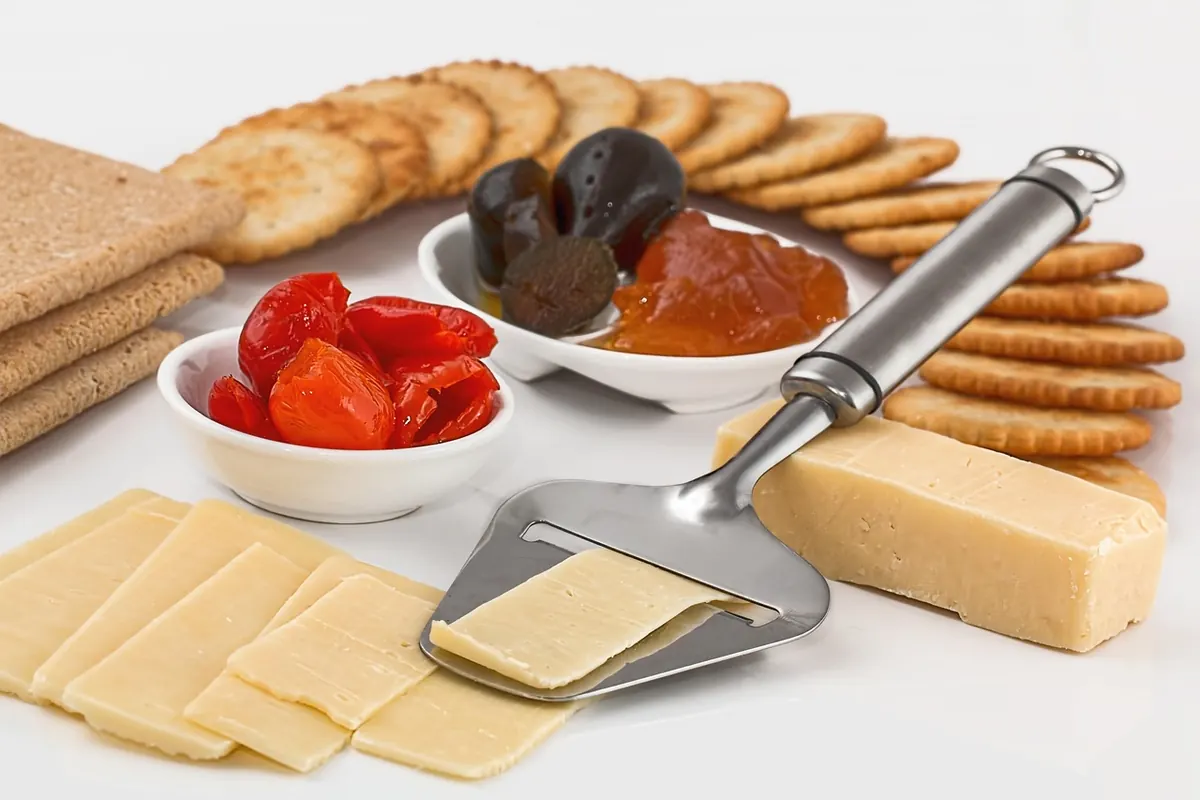
Cut for access, not for display. Take one slim wedge from a hard cheese so nobody has to start the job, slice a log on the diagonal, and portion blue into thin wedges rather than one dense block.
Two Chutneys, and One Sharp Thing
The job of a chutney here is to cut through fat. Apple and cider chutney does it beautifully, as does damson cheese or a spiced plum preserve. Quince paste, sliced thinly, is the traditional partner for blue. Two pots are enough; three starts to look like a jumble sale.
Then add one acidic element that is not sweet: pickled walnuts, cornichons, a spoonful of piccalilli, or a good English mustard. This is the part people forget and the part that keeps the board from feeling heavy.
Serve preserves in small ramekins with a separate spoon for each, and keep the portions modest. A neat spoonful invites people to take some; a brimming pot smeared across the board does not.
Let the Fruit and Nuts Do the Seasonal Work
October and November are generous months, so use them. Egremont Russet and Ashmead's Kernel apples are worth seeking out for their nutty, slightly dry flesh; slice them at the last minute and toss the slices in a little lemon juice so they stay pale. Comice pears, halved figs, a few damsons and a handful of blackberries all sit well alongside cheese.
Grapes on the vine look better than loose ones, and if you have a hot oven going anyway, roast a small bunch for ten minutes until the skins split. The sweetness deepens and the juice runs onto the board.
Toast your nuts. Walnuts, hazelnuts and cobnuts all improve dramatically after four minutes in a dry pan, and they add the crunch that soft cheeses lack. Scatter them in the gaps rather than in a bowl.
Crackers, Bread, and Something Plain
Aim for three textures and make sure at least one of them is plain. Oatcakes are excellent with blue, sourdough crispbread works with almost everything, and a simple water biscuit or a Bath Oliver lets the cheese speak. Add one soft option — a sliced walnut loaf, or warm focaccia torn into pieces — for the fresh cheeses.
Resist the all-seeded assortment. Strongly flavoured crackers fight the cheese, and by the end of the evening everything tastes of onion and poppy seed. If you have guests avoiding gluten, keep a separate small plate of plain corn or rice crackers well away from the bread.
Lay It Out Like a Landscape
Use the largest board you own, or a slate, or a baking tray lined with baking parchment. Crowding is the single most common mistake: a board with visible gaps looks abundant, while a packed one looks like a scrum.
- Place the cheeses first, spaced well apart, so each has its own territory.
- Set the ramekins around the edges at roughly clock positions, so people can reach in without leaning across the cheese.
- Fan the crackers in loose rows or small stacks. Never one tall heap that collapses on the first guest.
- Fill the gaps with fruit, nuts and a sprig or two of thyme or rosemary.
- Add a little height: a stack of oatcakes, or the vine of grapes draped over a wedge.
- Give each cheese its own knife, and add small paper labels if there are more than six people.
Quantities, Timing and the Practical Bits
- Allow 80–100g of cheese per person as the main event, 50g as a starter.
- Count on four to six crackers each, plus bread, and buy more than you need.
- Two hours is the sensible limit for cheese sitting out. After that, move the board somewhere cool and replenish from the fridge.
- Keep spare pieces wrapped and ready to swap in, so the board never looks picked over.
- Use a separate knife for blue cheese unless everyone at the table is eating it.
- Ask about dietary needs in advance; it takes one message and saves an awkward conversation.
- To drink: dry Cotswold cider, perry, a light Pinot Noir, or a glass of port with the blue. Good apple juice works just as well.
Build the board in two stages: the sturdy things first, the fragile things last.
Before the First Knock
Set out the cheeses, chutneys and nuts half an hour ahead, then leave the fruit, crackers and bread until the last five minutes so nothing goes soft. Put a small plate and a knife at each end of the table, keep a clean tea towel within reach, and resist the urge to tidy the board once people arrive.
The point of a sharing board is that it never needs carving, plating or announcing. It just sits there, looking like autumn, while the evening takes its own course.
Photo: amiraxgelcola / Pixabay